South vs. North Rim: Planning Your Perfect Grand Canyon Trip
"Don't just see the Grand Canyon; choose the journey that matches your vision."
Deciding on a Grand Canyon tour is less about finding the cheapest seat and more about deciding how much of the canyon you actually want to experience. The right choice prevents you from spending ten hours in a van only to spend twenty minutes at a crowded overlook.
Key Takeaways * The decision hinges on desired experience: views, accessibility, and depth of exploration. * Compare logistics (transport, timing, inclusions) before booking. * Know the difference between viewpoints and deep-canyon experiences.
* Align your tour choice with your group's pacing and interests.

Why does the Grand Canyon need a tour?
The desert heat shimmered off the windshield of a rental SUV as we pulled onto the dusty shoulder of a canyon-side road at 2:15 PM in July 2025, realizing we had no idea which direction led to the best sunset view.
According to World Bank, the United States recorded international tourist arrivals of 45,037,000 in 2020.
In that moment of quiet confusion, the sheer scale of the landscape felt less like a wonder and more like a logistical puzzle.
The sheer size of the Grand Canyon makes it difficult to navigate without a plan. It is not a single viewpoint but a massive geological empire that requires significant travel time to traverse.
In 2025, travelers often find that without a structured approach, they spend more time behind glass than on the rim.
You must balance accessibility versus immersion. Some travelers want to tick a bucket list item by seeing the rim from a paved walkway, while others want to hike into the shadows of the canyon.
A tour helps bridge that gap by providing the context and transportation necessary to move between these worlds.
Consider the difference between the South Rim and the North Rim. The South Rim is the classic, high-infrastructure destination, while the North Rim offers a more rugged, secluded atmosphere. Choosing a tour often means deciding which of these worlds you are prepared to enter.
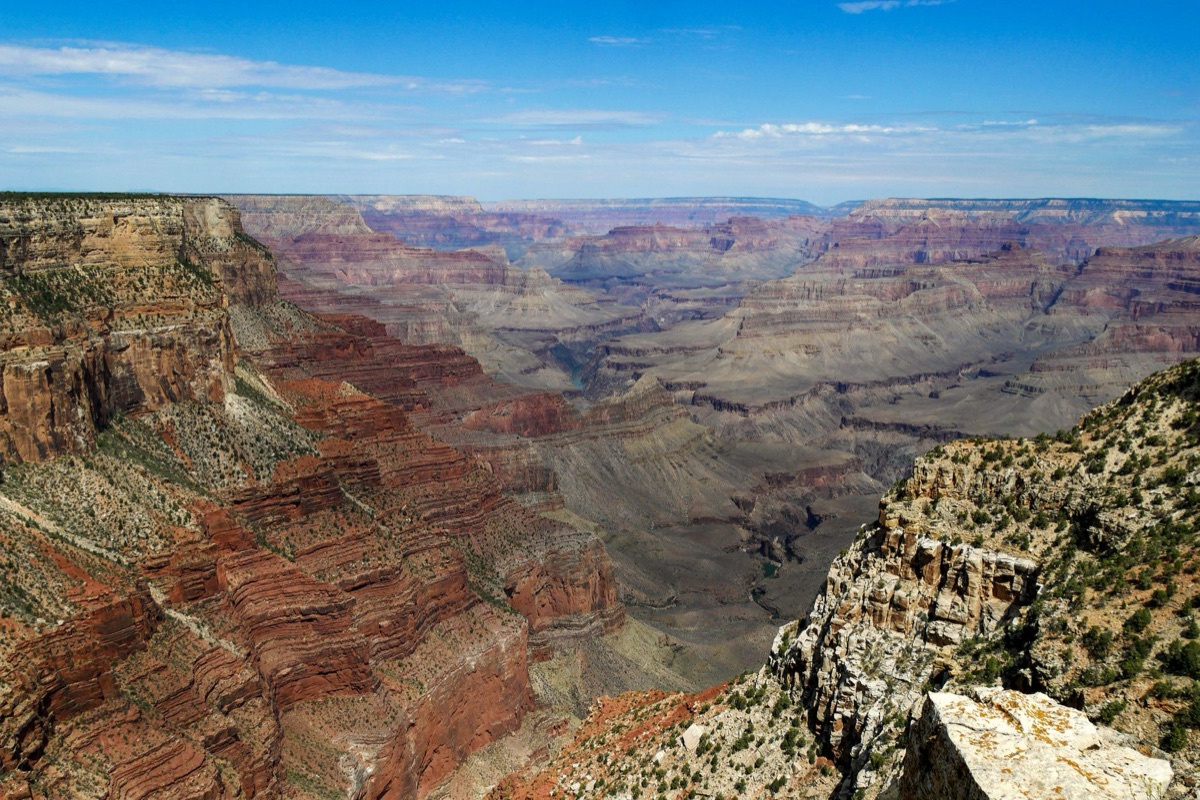
South Rim or North Rim: Which one is right for me? At high noon, the thick crowd pressed against us at the rim, the constant hum of voices echoing through the warm, dry air.
We stood at the edge of the South Rim at noon, surrounded by a sea of colorful windbreakers and the constant hum of chatter from a hundred different languages. The sheer density of people was a stark reminder that we were in the most popular slice of the canyon.
The South Rim is the primary destination for most visitors due to its higher accessibility and developed infrastructure. It features the most famous viewpoints, visitor centers, and lodging, making it the easiest choice for families or those with limited time.
Because it is open year-round, it is the most reliable option for travelers in any season.
In contrast, the North Rim offers a higher elevation and a much quieter, more pristine environment. It is perfect for those seeking solitude and different ecosystems, but it has a much shorter operational season due to heavy winter snow.
In 2026, travelers looking to escape the heat of the lower elevations often head north, provided the seasonal road access is open.
If you want to avoid the crowds, the North Rim is the superior choice, provided your timing aligns with its seasonal availability.
| Feature | South Rim | North Rim |
|---|---|---|
| Crowd Level | High | Low |
| Infrastructure | Extensive (Hotels, Shops) | Limited (Rustic) |
| Accessibility | Easy/Year-round | Moderate/Seasonal |
| Atmosphere | Bustling/Iconic | Quiet/Wild |
Self-drive, guided, or private: Which tour style is best? The engine of our rental car hummed rhythmically as we navigated the winding desert highways at 4:30 PM, the GPS recalculating every time we hit a patch of dead zone.
We had the freedom of the road, but the looming question of where to stop for lunch and how much gas we actually needed hung heavy in the air.
Guided group tours offer a structured environment where the logistics are handled by professionals. The pros include expert knowledge and a set itinerary that ensures you hit the major highlights without getting lost.
However, the downside is the fixed schedule; you move at the pace of the group, which can feel rushed for some or too slow for others.
Self-drive tours provide the ultimate flexibility. You control when you stop, how long you linger at a viewpoint, and when you hit the road. The trade-off is the mental load of planning: you must manage gas stops, meal breaks, and navigation yourself.
It requires significant local knowledge to avoid getting stranded or missing the best light.
Private tours are the premium solution for those who want to tailor the pace to their exact desires. While the cost per person is higher, the ability to customize the itinerary makes it ideal for families or photography enthusiasts.
It offers a level of intimacy and exclusivity that group tours simply cannot match.
What is the perfect itinerary checklist?
I remember checking my watch at 3:00 PM, realizing we had spent four hours in a van and only had thirty minutes of sunlight left at the canyon edge. The realization hit that we had traded actual exploration time for transit time, a mistake we wouldn't make again.
To avoid this, you should follow a structured planning process. Use this checklist to evaluate any tour you are considering:
- Verify the Transit-to-Activity Ratio: Check how many hours are spent in a vehicle versus how many hours are spent actually walking or exploring. A successful tour should prioritize time on the ground.
- Confirm the Seasonality: Ensure the tour is operational for your specific travel dates, especially if you are looking at the North Rim or higher-elevation trails.
- Match Physicality to Itinerary: Review the exact intensity of the walks. Do you need to prepare for a 3-mile hike, or is it mostly seated viewing?
- ly
- Check Inclusions and Hidden Fees: Confirm if meals, park entrance fees, and bottled water are included in the base price to avoid sudden expenses.
- Evaluate Light and Timing: Ensure the itinerary includes sunrise or sunset at a prime location, rather than just midday tours when the shadows are flat.
Budgeting for the view: Value vs. lowest price
We sat in a small diner in Flagstaff, staring at a receipt that was much higher than we had anticipated due to "service fees" and "environmental surcharges." It was a humbling lesson in why the sticker price isn't the final price.
The "all-inclusive" trap is a common pitfall in desert tourism. A low base price might look attractive, but you must account for hidden costs like parking fees, national park entry fees, and tipping structures.
Always calculate the total cost per person, including meals and tips, before deciding if a deal is actually a deal.
Mid-range options often provide the best value. These tours typically strike a balance between comfort and essential experiences, offering decent transportation and guided insights without the extreme price tag of a private charter. They are the "sweet spot" for most travelers.
Premium options are an investment in exclusivity and comfort. When you pay more for a private guide or a luxury vehicle, you are paying for time, ease, and specialized access. For special occasions or photography-focused trips, the extra cost can be justified by the quality of the experience.







Comments 0